
The ARTIST
Creativity Without A Box
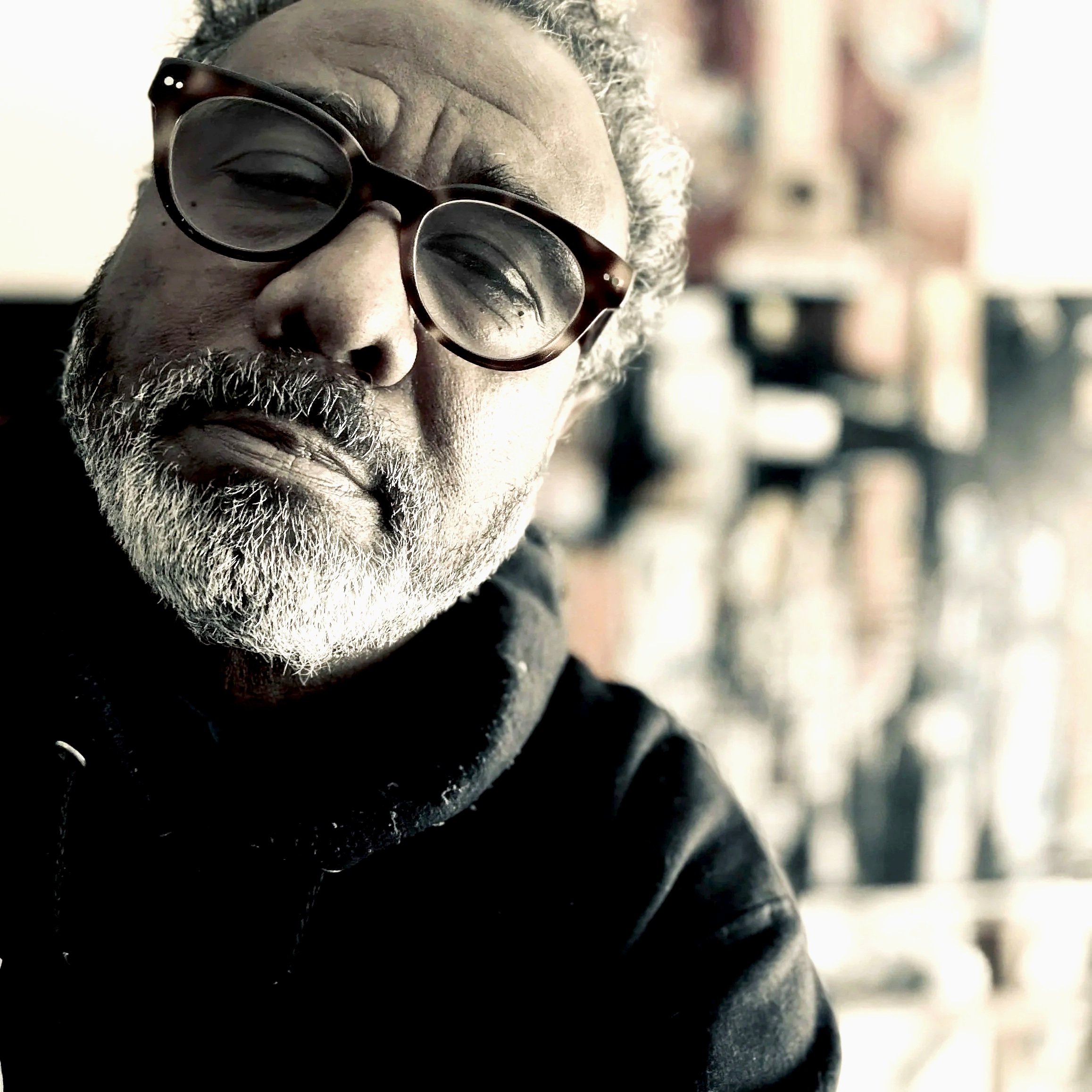
Damon Mescudi is a multidisciplinary artist whose studio practice has grown through more than thirty years of painting. Influenced by the lyrical abstraction
of Norman Lewis, the fearless reinvention of Pablo Picasso, and the dream-charged imagination of Salvador Dali, Mescudi’s work moves beyond literal representation and into the realm of emotion, memory, and the subconscious—where a painting can communicate without needing to explain itself.
Abstraction is central to his approach because it allows feeling to lead. Rather than illustrating a single narrative, he builds visual experiences that hold multiple truths at once—quiet and volatile, spacious and compressed, luminous and raw. The result is work that meets viewers in a personal way, inviting them to sense the painting before trying to “solve” it.
Mescudi’s process is rooted in intuition and experimentation. He works through layering, revision, and discovery—adding, subtracting, and reworking the surface until the composition settles into a convincing rhythm. Each piece becomes a record of choices over time, where traces of earlier decisions remain present beneath what is visible. Color is a primary engine in his studio language. Sometimes it functions as atmosphere—soft fields that suggest depth, memory, or distance. Other times it arrives as impact—bold contrasts and energetic pairings that push the eye, create friction, or amplify motion across the canvas.
damonmescudi

Download Full Bio